Where the show is written
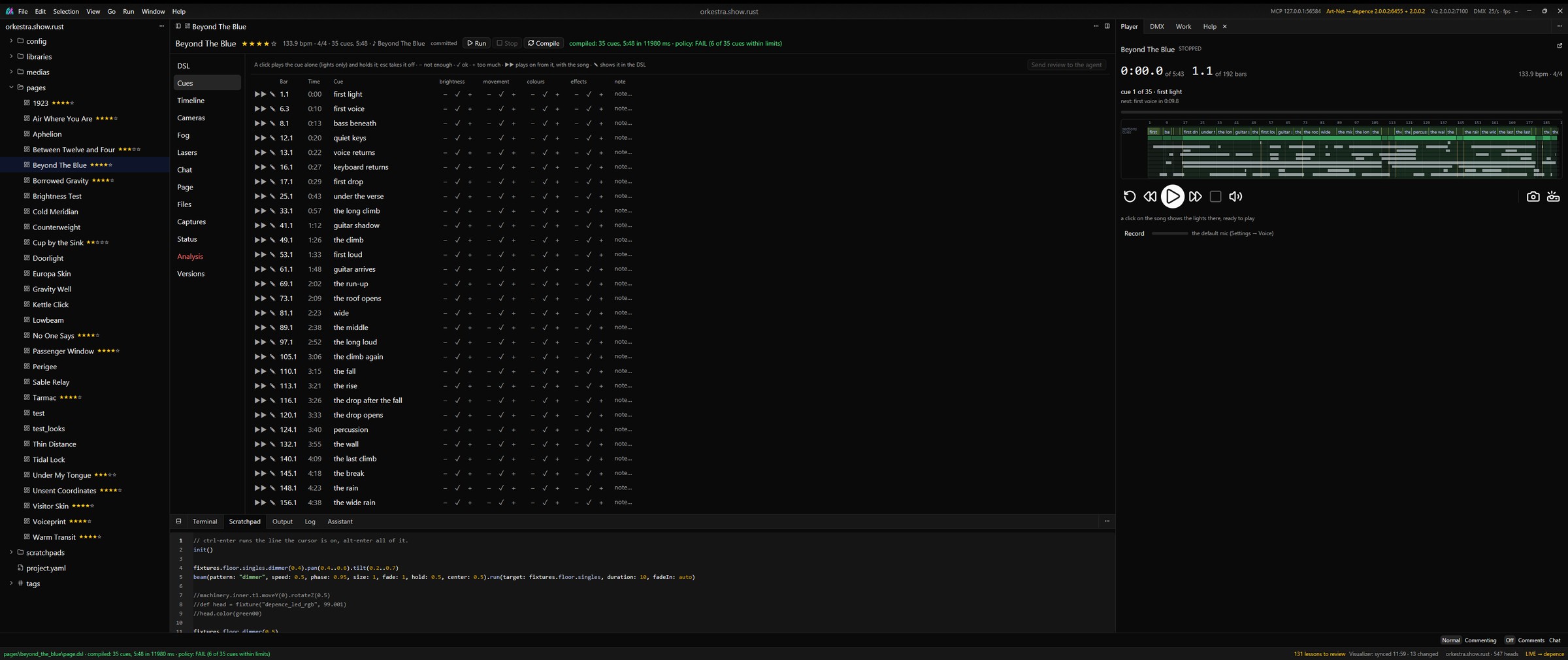
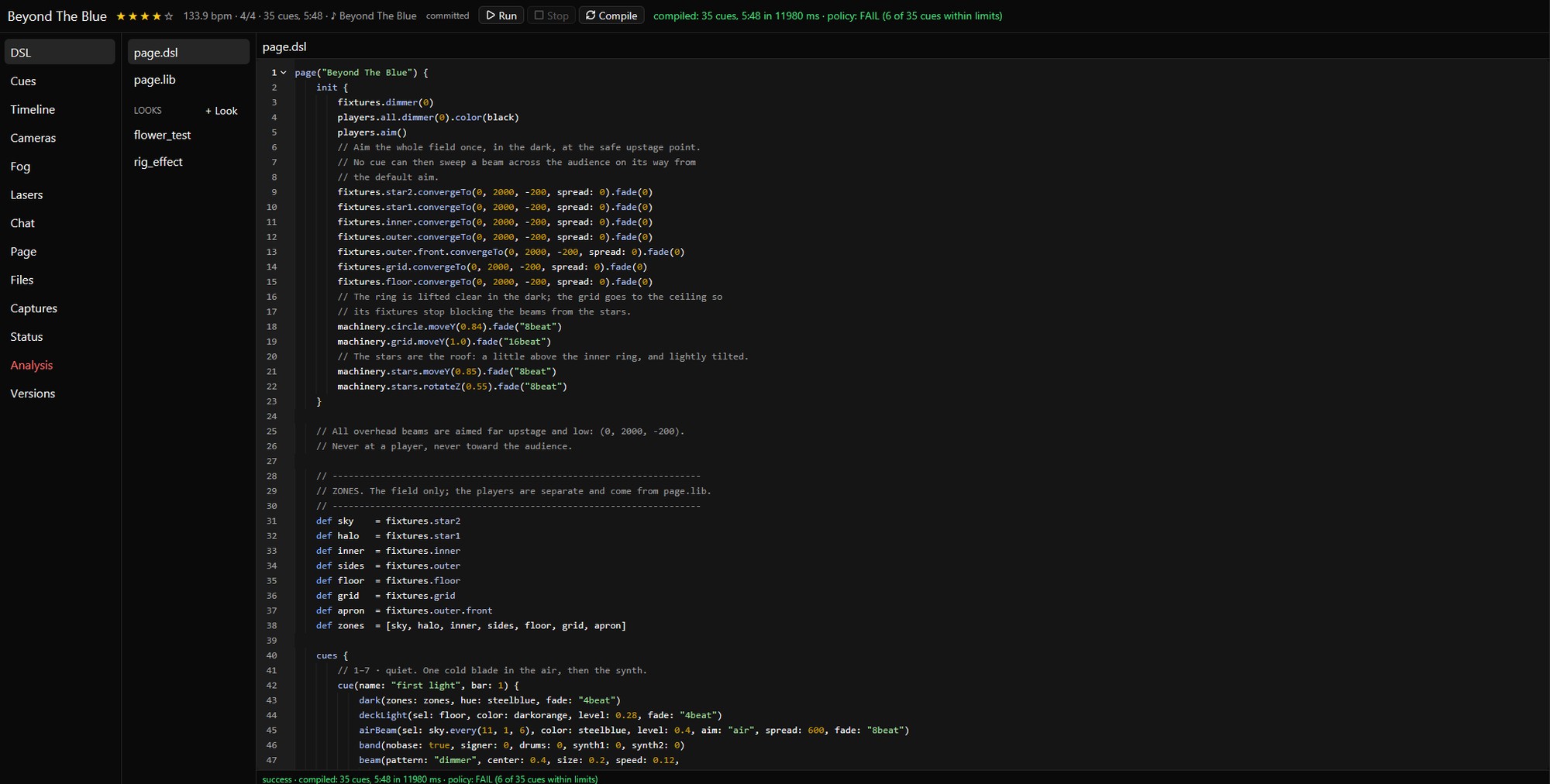
Each song is a page: a script in time with the music that says what the rig does, bar by bar. The studio plays it over Art-Net, to the real rig or to the visualizer, and checks every cue before it reaches the stage.
Say what you mean
Heads are picked by their tags, not by long lists of numbers. Aim them at a player and the aim follows the player. Lights, motors, lasers, fog, haze and cameras are all moved by the same words, in bars and beats.
camera.main.eye(0, 250, -2500)
  .target("singer")
  .lens(35)
  .fade("4bar")

room.haze.density(0.4)
Timed to the song
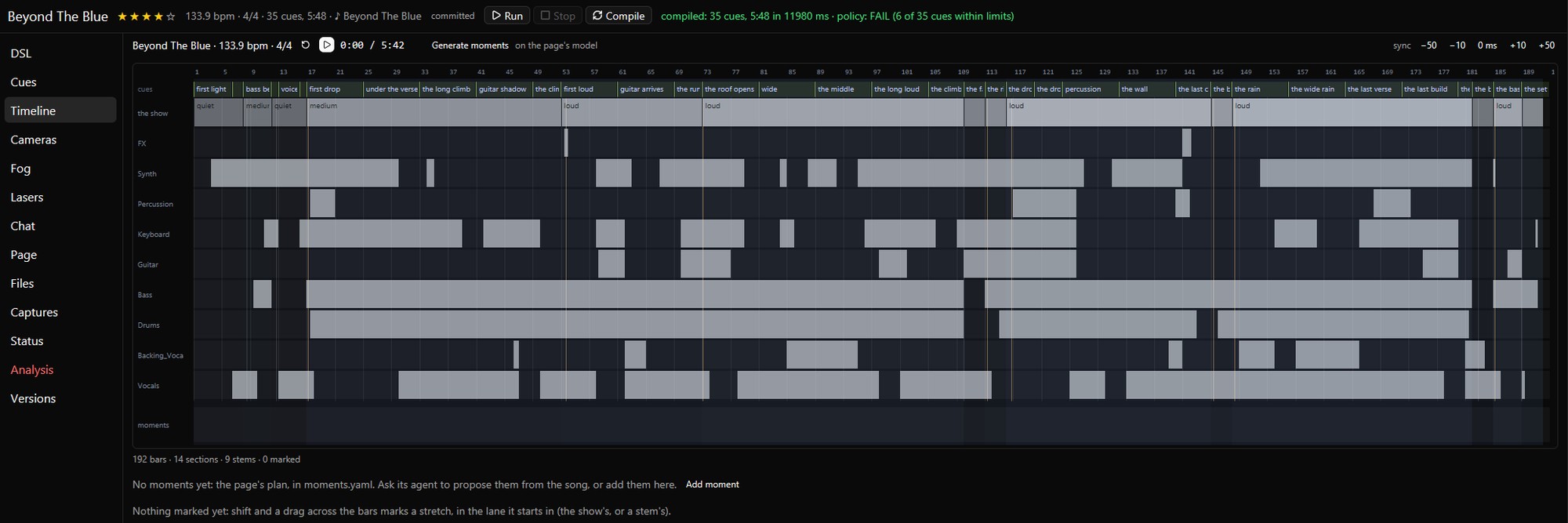
Each song is analysed down to its stems. Pages count in bars and beats, and a click on the timeline shows the lights as they are at that moment.
A band that plays along
The players on stage move with the music: the drummer's sticks on the drum hits, the singer's arm up before she sings, the keyboard players with the keys. The violinist comes on only when the strings play.
Every cue checked
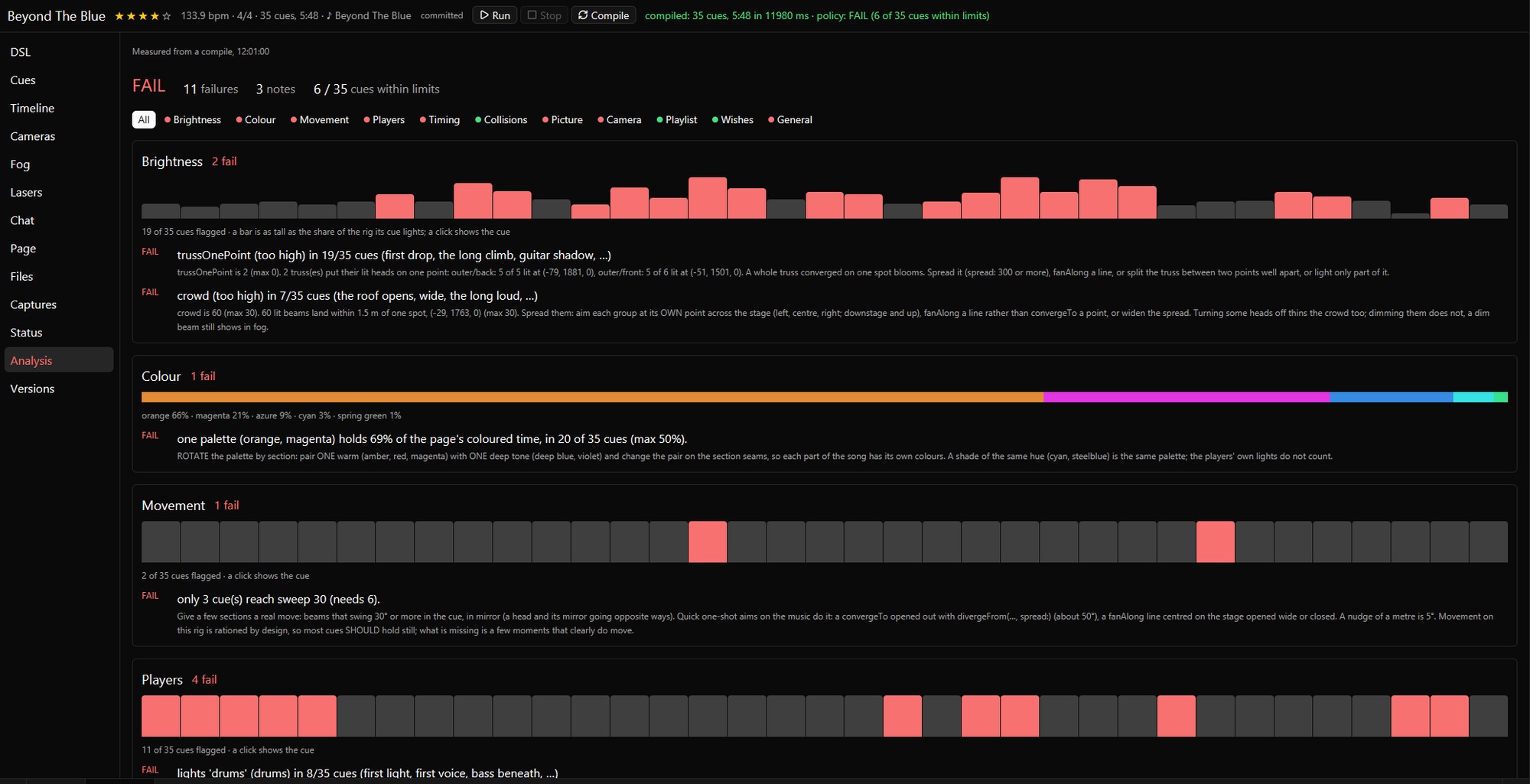
An analyzer reads each cue as it will look from the house. It flags beams crossing on a truss, light spilling off the stage, heads lit while they move, a camera that snaps or never moves. It also compares each song with the songs around it, so the set doesn't repeat itself.
An assistant that sees the stage
A built-in assistant works on the pages with you. It looks at the stage in the visualizer, plays and measures a look before it suggests it, and shows it to you in the visualizer first.
Cameras, fog and lasers as sheets
Camera shots, fog cues and laser moments each have a screen of their own: a list in time, each cue edited beside it, and the view follows the song as it plays.
Knobs in your hands
Pick a group of heads and the Controller lays out their parameters on knobs, on screen and on a MIDI controller such as the Electra One, with names and colours on its display.
Playlists
The running order of the show. Starting one page stops the one before it: its lights, its song and its camera.
One rig, two apps
The studio takes the rig, its places and its cameras from the visualizer as it is built. Every Art-Net destination has its own switch, and one key stops all DMX.